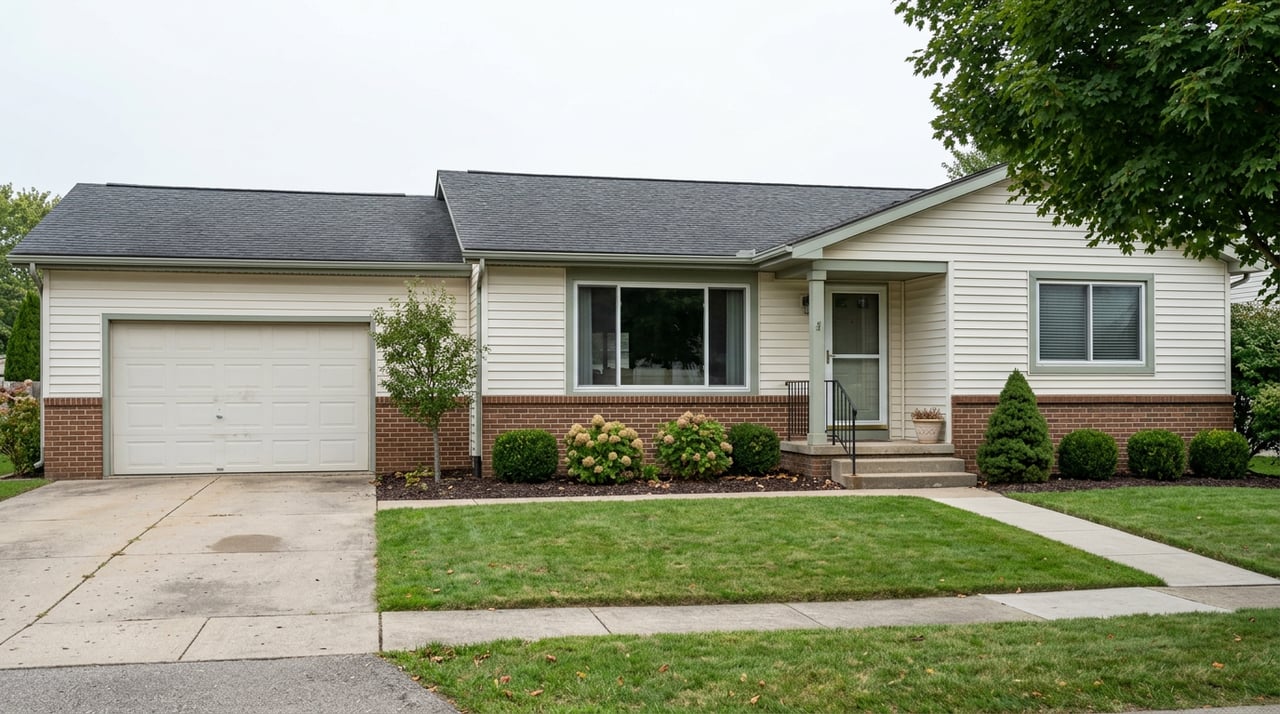
Wondering whether you should sell your New Pekin home or keep it as a rental before your next move? It is a common question, especially if you are headed toward Indianapolis and want to make the smartest choice with your equity, monthly costs, and future plans. The right answer depends on your numbers, your tax position, and how realistic you are about being a long-distance landlord. Let’s break it down.
Start With the Real Numbers
If you are deciding between selling and renting, the first step is simple: look past the idea of “holding onto the house” and run the full math. In Washington County, the most recent Census estimates show a median value of owner-occupied homes at $172,200, a median monthly owner cost with a mortgage of $1,259, and a median gross rent of $780, according to the U.S. Census QuickFacts for Washington County.
That gap matters. It suggests that renting only makes sense if your property can bring in enough rent to cover more than just your mortgage payment. You also need to account for taxes, insurance, repairs, vacancy, and any management or travel costs tied to the property.
Compare Rent to Carrying Costs
A lot of homeowners focus on one number: the mortgage. That is understandable, but it is not enough. A rental needs to support the full carrying cost of the home, not just the principal and interest payment.
Before you choose to rent, ask yourself:
- What is the realistic monthly rent for your specific home?
- What are your monthly costs for mortgage, taxes, and insurance?
- How much should you set aside for repairs and maintenance?
- What happens if the home sits vacant for a month or two?
- Will you need help with leasing, repairs, or tenant communication?
If the margin is thin, selling may be the safer and simpler option.
Why Selling Can Be the Cleaner Move
For many homeowners, selling offers two big advantages: simplicity and liquidity. If you need the equity from your New Pekin home to help fund your next purchase, selling can make your move much easier.
There is also a major tax point to consider. If the home has been your main residence, federal rules may allow you to exclude up to $250,000 of gain, or $500,000 for some married couples filing jointly, if you meet the ownership and use tests. In general, that means you owned and lived in the home for at least 24 months during the 5 years before the sale, as explained in IRS Publication 523.
The Home-Sale Exclusion Window Matters
If you are still within that window, selling now may help you preserve a more straightforward tax outcome. Once you convert the property into a rental, things can get more complex.
According to IRS Publication 523, rental periods and depreciation can affect how much gain may be excluded later. Depreciation claimed while the property is used as a rental may also be subject to Section 1250 recapture when you sell.
That does not mean renting is a bad idea. It means the decision should be made with open eyes and solid tax advice.
Renting Can Work, but It Is a Business
Renting out your former home can be a smart move if the cash flow is there and you want to keep the property for the long term. But once you become a landlord, the home stops being just a home. It becomes an income-producing asset with real tax, maintenance, and compliance responsibilities.
The IRS requires you to report rental income. It also says that expenses such as maintenance, insurance, taxes, interest, and depreciation are generally deductible, and depreciation starts when the property is ready and available for rent, even if it is temporarily vacant, according to IRS Publication 527.
Tax Benefits Come With Limits
Some homeowners assume rental losses will automatically offset their regular income. That is not always the case. The IRS notes in Publication 527 that rental real estate is generally treated as a passive activity, so losses may be limited by passive-activity and at-risk rules.
In plain English: yes, there may be tax benefits, but no, it is not always as simple as “write everything off.” This is one of the best reasons to talk with a CPA before turning your New Pekin home into a rental.
Distance Changes the Equation
If you are moving toward Indianapolis, distance is not extreme, but it is enough to create friction. The drive from New Pekin to Indianapolis is about 1 hour and 50 minutes under typical traffic, based on Travelmath’s drive-time estimate.
That means every repair visit, turnover check, showing, contractor meeting, or key handoff takes more planning. A local rental can be managed with quick pop-ins. A long-distance rental usually cannot.
Long-Distance Landlord Questions to Ask
Before you rent out the home, think through the practical side:
- Who will handle repair calls?
- Who will meet contractors or check completed work?
- Who will document move-in and move-out condition?
- How will you manage showings or lease renewals?
- Are you comfortable solving issues from nearly two hours away?
Indiana also has relatively limited landlord-tenant regulation at the state level, and the state says there is no agency that directly regulates tenant-landlord complaints, as noted in the Indiana landlord-tenant FAQ. That puts even more pressure on landlords to stay organized and get good professional guidance when needed.
Do Not Overlook Maintenance Risk
A rental home needs to stay safe and functional, not just occupied. Indiana health guidance notes that a dwelling can be considered unfit for human habitation if it is dangerous or harmful to life or health because of repair issues, drainage, plumbing, lighting, ventilation, or construction defects, according to the state’s public nuisance and housing guidance.
That matters because deferred maintenance can snowball fast when you are not nearby. A small plumbing issue, a moisture problem, or poor ventilation can turn into a much bigger headache when inspections and follow-up take longer.
Security Deposit Rules Need Good Records
If you rent the home, paperwork matters too. Indiana security-deposit rules require an itemized notice and any remaining balance to be returned within 45 days after the rental agreement ends, once the tenant has provided a forwarding address, according to the Indiana rental compliance manual.
That means move-in photos, written condition notes, receipts, and timelines all become part of the job. If that sounds like more than you want on your plate, selling may be the better fit.
Your Homestead Status May Change
Another detail many homeowners miss is the homestead benefit. Indiana’s homestead benefit is tied to your principal residence and does not include investment or rental property. One county homestead page states that the auditor should be notified within 60 days if the property becomes a rental or otherwise stops being your primary residence, according to the Indiana homestead guidance.
While that page is county-specific, the takeaway is still important: once your home is no longer your principal residence, your tax treatment may change. That is another item to confirm early, not after the move.
When Selling Usually Makes More Sense
Selling often fits best if your top priority is clarity and convenience. It can also be the stronger option if you need cash for your next home purchase or if the property is likely to need major repairs soon.
In many cases, selling is the better move when:
- You want to access your equity now
- You are still within the home-sale exclusion window
- Expected rent is too close to your carrying costs
- You do not want to manage a property from a distance
- The home may need significant upkeep in the near future
If that sounds like your situation, selling may help you move forward with fewer moving parts.
When Renting May Be Worth It
Renting can make sense if the property will produce a comfortable monthly margin after all expenses, not just the mortgage. It may also fit if you are prepared to treat the home like a business and have a realistic support plan in place.
Renting often works better when:
- Market rent clearly exceeds your full carrying costs
- You have cash reserves for repairs and vacancy
- You understand the tax rules or have a CPA advising you
- You have a plan for maintenance and tenant communication
- You are comfortable holding the home as a longer-term asset
The keyword is comfortable. If the numbers barely work on paper, they may not work in real life.
Four Questions to Decide Faster
If you feel stuck, narrow the choice with four practical questions.
Will the Rent Truly Cover Everything?
Use realistic rent, not optimistic rent. Then subtract mortgage, taxes, insurance, maintenance, vacancy, and any outside help you may need.
Are You Still in the Tax Exclusion Window?
If you qualify for the home-sale exclusion now, selling may offer a cleaner result than converting the home to a rental first. Review the rules in IRS Publication 523 and confirm your situation with a tax professional.
Who Will Handle the Property From Indianapolis?
A nearly two-hour drive changes what “easy to manage” means. If you do not have a clear answer for repairs, inspections, and tenant needs, renting may become stressful fast.
What Does Your CPA Say?
This is not just a real estate decision. It is also a tax decision. A CPA can help you understand depreciation, passive-loss limits, and what a future sale could look like after rental use.
The Bottom Line for New Pekin Homeowners
If you want simplicity, access to equity, and fewer long-distance responsibilities, selling your New Pekin home is often the better path. If the rent will comfortably cover all costs and you have a solid plan for managing the property from afar, renting may be worth a closer look.
The best decision is the one that matches your finances, your timeline, and your tolerance for hands-on ownership after the move. If you are weighing a sale and planning your next step around Indianapolis, Mariah Barlow can help you think through the move with a practical, no-pressure strategy.
FAQs
Should you sell or rent a New Pekin home before moving to Indianapolis?
- It depends on whether the home will produce strong rental cash flow after all costs, whether you need your equity now, and whether you are ready to manage the property from about 1 hour and 50 minutes away.
Does renting out a former New Pekin home affect taxes when you sell later?
- Yes. According to IRS guidance, converting a home to rental use can complicate the home-sale exclusion and may create depreciation recapture issues later.
What costs should you include before renting out a New Pekin home?
- You should look at mortgage, property taxes, insurance, maintenance, repairs, vacancy, and any travel or outside help needed to manage the property.
Does an Indiana homestead benefit continue after a home becomes a rental?
- No. Indiana homestead benefits are tied to a principal residence, not an investment or rental property.
Is it hard to manage a rental property in New Pekin while living in Indianapolis?
- It can be more challenging because even routine tasks like showings, inspections, and repair visits require more time and coordination when you live nearly two hours away.