Buying in Woodruff Place is not the same as buying a newer home a few blocks away. Here, the architecture is part of the value, the upkeep, and the day-to-day experience. If you are thinking about buying in this historic Indianapolis neighborhood, understanding the style mix and what it means for maintenance can help you make a smarter offer and avoid expensive surprises later. Let’s dive in.
Why Woodruff Place architecture matters
Woodruff Place was platted in 1872 and is widely described as Indianapolis’s original suburb. It spans about 80 acres with 261 lots, and its historic identity comes from more than just the houses. The broad esplanades, fountains, statuary, entrance features, and long views are all part of the neighborhood’s character.
That setting matters when you buy. In Woodruff Place, you are not just evaluating square footage and finishes. You are also buying into a planned historic environment where the house, porch, roofline, windows, and relationship to the boulevard all shape the property’s appeal and renovation path.
Expect a mix of architectural styles
One of the biggest misconceptions about Woodruff Place is that every home fits neatly into one Victorian box. In reality, the district includes a late-19th- and early-20th-century mix of homes, with the most significant properties dating from about 1875 to 1917. Additional homes from 1918 to 1929 add even more variety.
That means style labels are useful, but they only tell part of the story. Many homes are wood-frame, and the neighborhood includes several design eras rather than one uniform look.
Victorian, Eastlake, and Late Stick homes
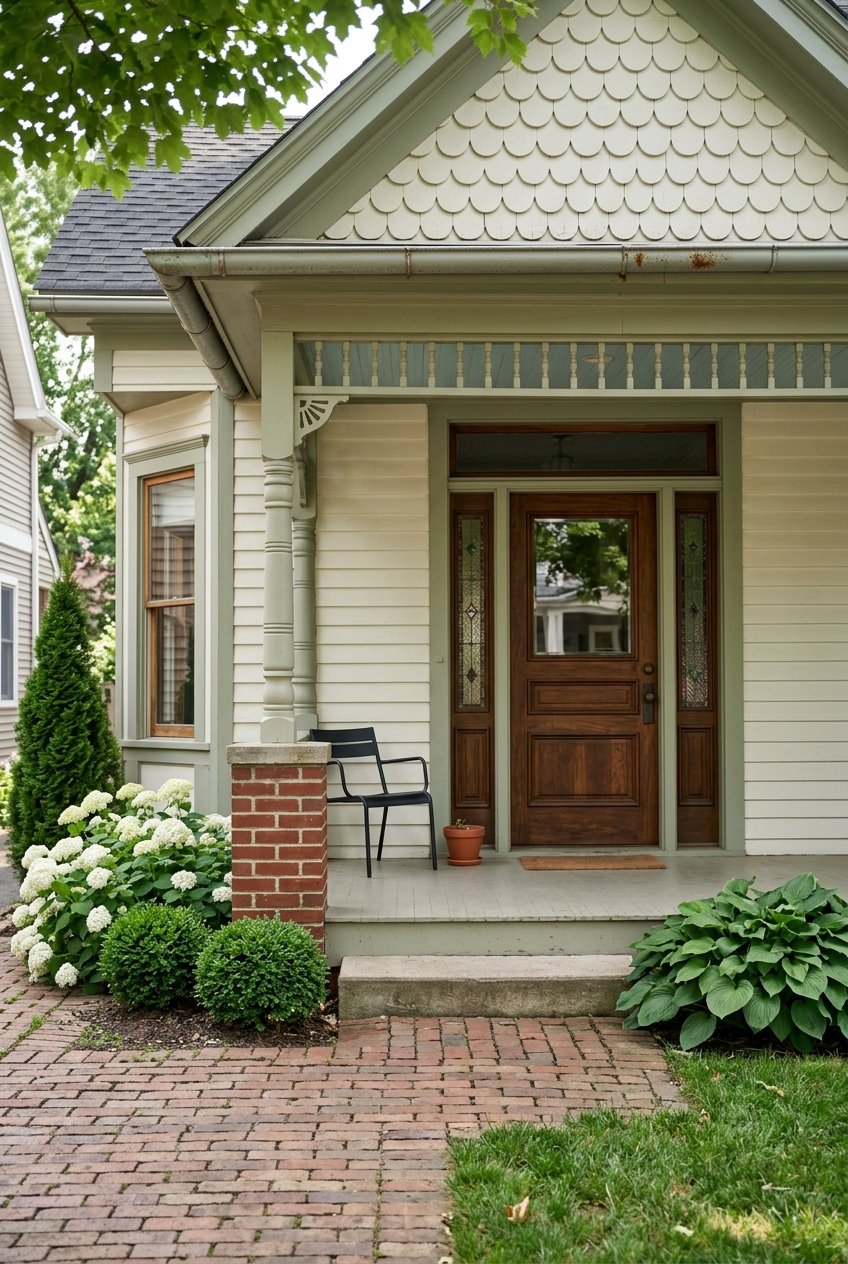
Some of the oldest surviving homes in Woodruff Place fall into Victorian, Eastlake, and Late Stick categories. These homes often feature multi-gabled roofs, carved wood trim, spindle supports, and delicate-looking verandas.
For a buyer, that usually means more exterior detail to maintain. More trim and wood surfaces often translate into more regular painting, patching, and carpentry over time.
Queen Anne homes
Woodruff Place also includes Queen Anne homes from the 1890s. These homes tend to lean into asymmetry, layered exterior textures, towers, finials, stained glass, and more complex roof forms.
Inside, Queen Anne homes often move away from simple boxy layouts. You may find more flowing, asymmetrical interiors organized around a central staircase, which can feel dramatic and charming but may also create quirks in room size and circulation.
Revival and later-period homes
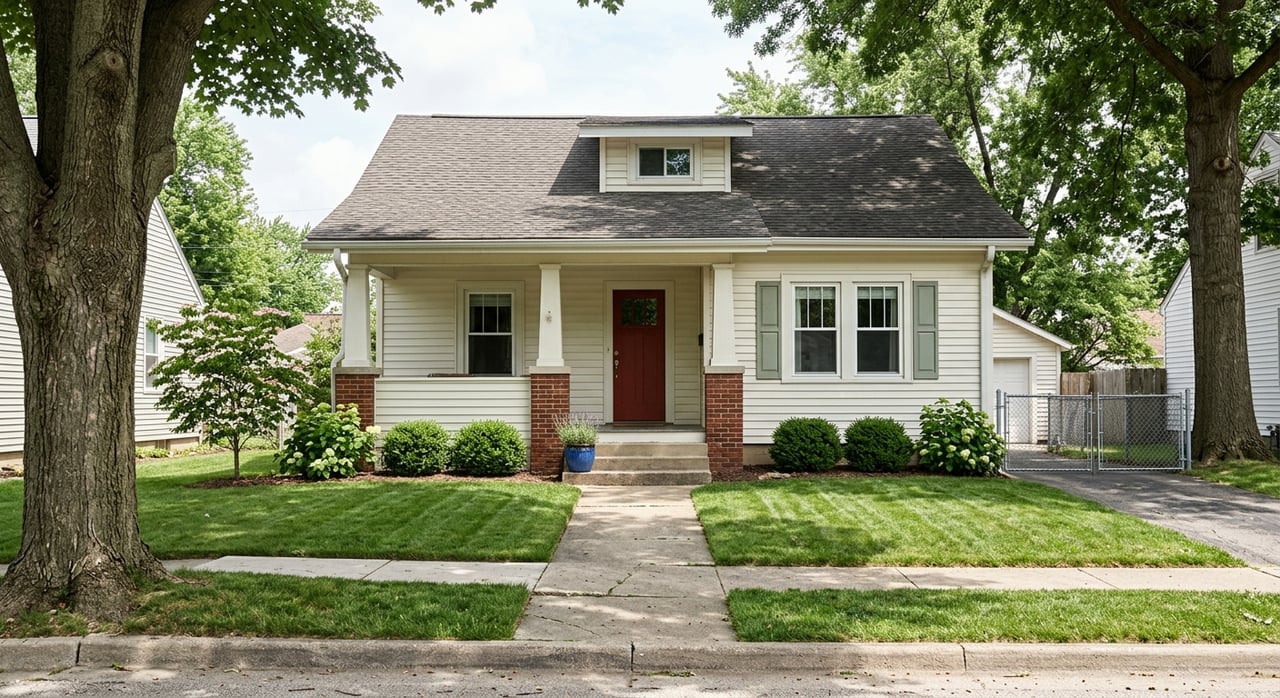
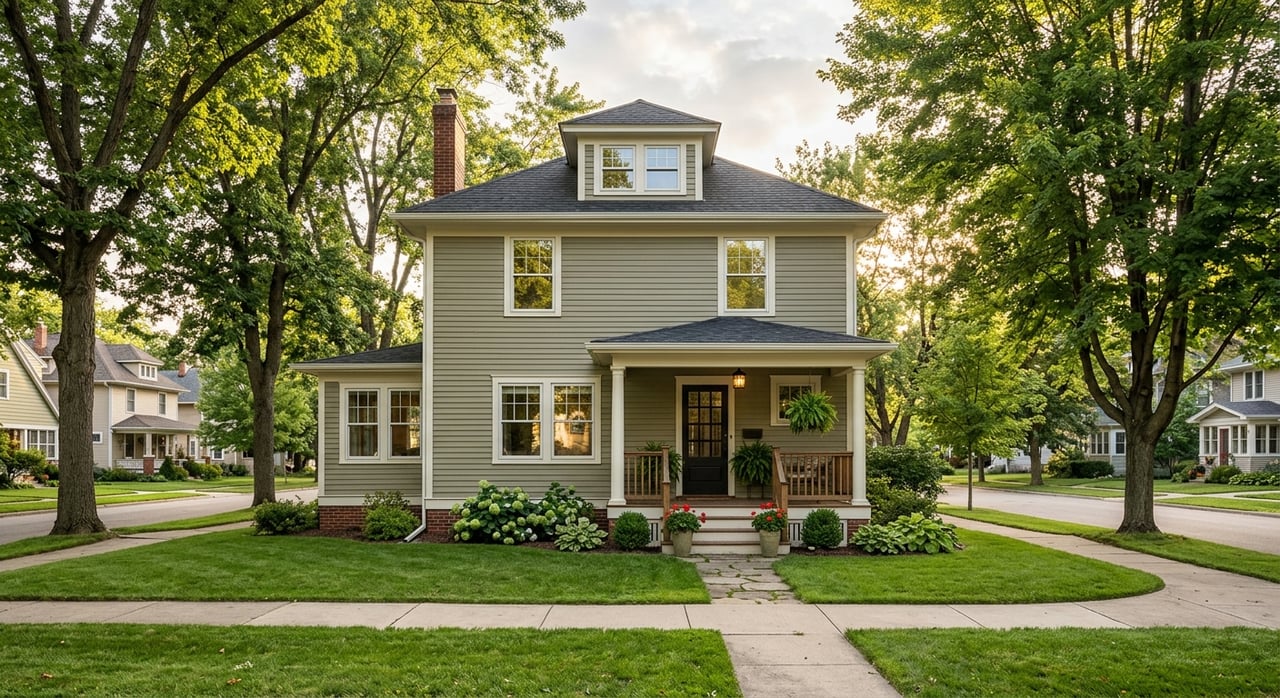
As the neighborhood evolved, other styles arrived too. Woodruff Place includes Neo-Classic, Georgian Revival, English Tudor, bungalow, foursquare, Colonial Revival, and other eclectic homes.
This variety is part of what makes the neighborhood interesting. It also means your maintenance checklist can vary a lot from one home to the next, even on the same block.
What buyers should notice outside
When you tour a home in Woodruff Place, start with the features that shape both curb appeal and future repair costs. In many cases, these visible elements tell you more about ownership demands than a fresh coat of paint inside.
Porches are a major clue
Front porches are character-defining features in historic homes, and they are also some of the most exposed parts of the structure. Moisture, insects, and everyday wear can take a toll, especially on wood porches.
In Woodruff Place, preservation guidance recommends repairing or matching original porch floors when possible. It also advises against major changes to primary-facade porches and against replacing original wood floors with concrete. If a porch looks heavily altered or patched with mismatched materials, that is worth a closer look.
Windows deserve a careful review
Historic windows contribute a lot to a home’s architectural character. Guidance for Woodruff Place emphasizes keeping original trim, matching original size and pattern when replacement is necessary, and avoiding new window openings on significant elevations.
From a buying perspective, do not assume older windows automatically need full replacement. Repair, weatherization, storm windows, and weatherstripping may improve performance while preserving historic features. That can affect both your budget and your renovation plans.
Wood siding and trim often drive upkeep
Most Woodruff Place residences are wood-frame, so exterior upkeep often centers on siding and trim. The local preservation plan recommends retaining sound original siding, repairing splits and rot when possible, and avoiding substitute materials like vinyl, aluminum, plywood, and hardboard unless replacement is truly necessary.
That is a practical clue for buyers. If you want a lower-maintenance exterior with frequent material swaps, a historic wood-frame house may feel more demanding than you expect.
Rooflines and chimneys matter
In this neighborhood, the shape of the roof is part of the home’s character. Preservation guidance recommends keeping the original roof slope and form, retaining chimneys that contribute to the roofline, and avoiding visible skylights, vents, and equipment where they would change the appearance from the street.
As you walk a property, look at roof complexity, chimney condition, and any visible mechanical additions. A complicated roof can be beautiful, but it may also require more specialized repair work over time.
Interior layout may not be original
A beautiful exterior does not guarantee an original interior plan. Neighborhood sources note that many Victorian and Edwardian homes were subdivided into apartments during the housing shortage after World War II.
That means the current room count, layout, or traffic flow may differ from the original design. If you are buying for everyday function, ask whether walls were added, stair access changed, or units later converted back to single-family use.
Renovation in Woodruff Place is not a blank slate
If you love the idea of updating a historic home, Woodruff Place can be exciting. But it is important to understand that renovation here often comes with more rules and more design responsibility than in a non-historic area.
A key distinction is the difference between National Register status and local historic protection. National Register listing alone does not prevent private owners from altering their property, but Indianapolis historic-preservation zoning can require a certificate of appropriateness before an improvement-location permit is issued for covered work.
Verify district status before you write an offer
Before you buy, confirm the parcel’s status using Indianapolis’s official historic-district lookup tool. This helps you understand whether planned changes could require review.
That step matters if you are thinking about replacing windows, rebuilding a porch, changing siding, adding visible exterior equipment, or making other exterior updates. It is much better to know the review path before you own the home.
Additions and garages need strategy
If you are dreaming about adding more space, the neighborhood guidance is clear. New work should be compatible in massing, height, materials, orientation, and setback, but it should still read as new rather than as a fake historic copy.
The plan also notes that accessory dwelling units above garages need a variance in the district’s D-5 zoning. If future flexibility matters to you, that is a smart question to raise early.
Budget for preservation, not just purchase price
In Woodruff Place, the financial reality is often less about one giant project and more about repeated preservation work over time. Think porch carpentry, sash repair, selective painting, trim repair, and historically compatible materials.
That does not mean every house is a money pit. It means you should align your budget with the kind of home you are buying. A house with ornate woodwork and a complex porch may offer incredible charm, but it may also ask for more hands-on upkeep than a simpler later-period home.
A smart Woodruff Place buyer checklist
Before you write an offer, keep your focus on style, condition, and setting together.
- Identify the home’s likely architectural style and era
- Review porch condition, materials, and any visible alterations
- Examine windows, trim, and siding for repair quality versus replacement shortcuts
- Look closely at roof shape, chimneys, and visible equipment
- Ask whether the interior layout was altered during post-WWII apartment conversion periods
- Verify whether the parcel is subject to local historic-preservation review
- Consider how the home sits within the boulevard, alley, and esplanade setting
- Build a maintenance budget that reflects preservation-friendly repairs
Why this matters for your offer strategy
In a neighborhood like Woodruff Place, two homes with similar bedroom counts can have very different long-term ownership costs. One may have mostly intact windows, sound porch flooring, and repairable wood siding. Another may come with poorly matched replacements, deferred trim work, and a more complicated path for future changes.
That is why buying here takes more than falling in love with stained glass and a pretty tower. You want a clear picture of what gives the home its character, what condition those features are in, and what kind of stewardship the property will likely require.
If you are considering Woodruff Place, a little architecture homework goes a long way. And if you want a second set of eyes on a house before you make your move, Mariah Barlow can help you look past the charm and into the details that matter.
FAQs
What architectural styles are common in Woodruff Place?
- Woodruff Place includes Victorian, Eastlake, Late Stick, Queen Anne, Neo-Classic, Georgian Revival, English Tudor, bungalow, foursquare, Colonial Revival, and other eclectic homes from the late 1800s and early 1900s.
What makes Woodruff Place homes different from other Indianapolis homes?
- The homes are part of a planned historic setting that includes broad esplanades, fountains, statuary, entrance features, and long views, so the neighborhood experience is shaped by both the houses and the boulevard layout.
What should buyers inspect first on a Woodruff Place historic home?
- Pay close attention to porches, windows, wood siding, trim, rooflines, chimneys, and any visible exterior alterations because these features affect both historic character and future maintenance costs.
Are Woodruff Place homes usually brick or wood-frame?
- Most residences in Woodruff Place are wood-frame, while only a small number of the original homes were built in masonry.
Can you renovate a home in Woodruff Place however you want?
- Not always. Indianapolis historic-preservation zoning can require a certificate of appropriateness before an improvement-location permit is issued for covered work, so buyers should verify the parcel’s status before planning changes.
Were some Woodruff Place homes converted into apartments?
- Yes. Neighborhood sources note that many Victorian and Edwardian homes were subdivided into apartments after World War II, so the current layout may not reflect the original floor plan.